
Beyond Painkillers: A Holistic Approach to Managing Osteoarthritis Stiffness

Getting out of bed in the morning should feel like the peaceful start to a new day. But when you are living with osteoarthritis, those first few steps can feel like moving through wet cement. For years, the go-to answer for joint wear-and-tear has been a steady rotation of conventional non-steroidal anti-inflammatory drugs (NSAIDs). While they can offer temporary relief, long-term use often introduces a heavy burden on your digestive tract, liver, and kidneys. True relief shouldn't require trading your internal wellness for temporary physical mobility.
Key Takeaways
Address Root Friction: Osteoarthritis involves the gradual breakdown of protective cartilage, leading to bone-on-bone friction and classic morning stiffness.
Gentle, Targeted Relief: Natural homeopathic remedies like Rhus Tox and Bryonia can help manage inflammation and stiffness based on how your body responds to movement.
Supportive Emotional Balance: Integrating Bach Flower remedies helps manage the mental frustration, anxiety, and stress that often accompany restricted physical mobility.
Protect Your Organs: Transitioning to a personalized, holistic management plan minimizes dependence on heavy daily painkillers, safeguarding long-term liver and kidney function.
Understanding the "Rusty Hinge" Effect
To effectively manage joint stiffness, it helps to look at exactly what is happening inside the joint capsule. Osteoarthritis is essentially the gradual thinning of the smooth cartilage that caps the ends of your bones. Think of cartilage as your body's natural shock absorber.
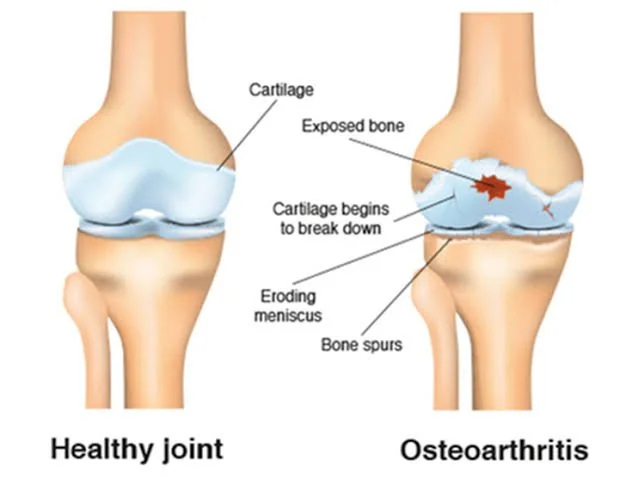
How cartilage degeneration changes joint mechanics.
Source: Sports and Spine Orthopaedics
As the visual above highlights, when this protective cushion begins to break down, the joint experiences increased friction. Your body tries to protect itself by producing extra fluid or creating small bony outgrowths called bone spurs. Over hours of rest or sleep, this fluid builds up and thickens, which is why your knees or hips can feel entirely locked up or "rusty" first thing in the morning.
The Holistic Alternative: Targeted Support Without the Strain
In clinical homeopathy, the focus shifts away from simply blocking pain signals to addressing how your unique body experiences discomfort. Because no two people experience stiffness the same way, treatments are tailored to specific physiological patterns:
For the "Rusty Hinge" Pattern (Rhus Toxicodendron): This is ideal for individuals whose stiffness is severe during the first few steps but gradually improves as they keep moving and warm up the joint.
For the "Rest-Lovers" Pattern (Bryonia Alba): This provides support when even the slightest movement causes sharp discomfort, and the joint feels significantly better only when completely still or supported by firm pressure.
By utilizing micro-dosed natural substances, these remedies work alongside your body’s natural recovery mechanisms. They do not require processing through heavy filtration pathways in the liver or kidneys, making them a safe approach for long-term daily management.
Balancing Mind and Body
Chronic joint stiffness does more than limit your steps; it can subtly shrink your world. It is completely natural to experience frustration, anxiety about future mobility, or a sense of helplessness when your body refuses to move the way you want it to.
This emotional toll directly triggers physiological stress, which can actually worsen muscle tension around your joints. Integrating Bach Flower Remedies—such as Gentian for discouragement or Impatiens for the frustration of slow physical pacing—helps soothe the nervous system. When your mind relaxes, the physical body follows, paving a smoother path to restoring your natural, vital mobility.
Scientific Publications
Efficacy of Homeopathic Treatment for Osteoarthritis: A randomized, double-blind clinical trial evaluating the impact of specific homeopathic complexes against conventional treatments for joint distress.
Safety and Renal Profiles Profile of Long-term NSAID Therapy: A comprehensive study outlining the systemic risks associated with prolonged use of traditional pain medications in aging populations.
